Branding
Branding for contractors and home businesses
Clarify what your business stands for and make its visual identity consistent. We work on positioning, messaging, typography, color, imagery, and the assets your next website or sales material needs.
Refresh or identity
Do you need a rebrand or a few updates?
A refresh fits when the core identity still serves the business but its application is inconsistent. That can mean clearer messaging, agreed colors and type, better image direction, and coherent templates.
Broader identity work fits when the business has changed or the existing identity communicates the wrong offer. It can include logo development and a more complete visual and verbal direction. A new logo isn't the automatic answer to unclear website copy.
A focused refresh
Audit existing materials, clarify the message, and document a consistent way to use the parts worth keeping.
A broader identity
Develop the agreed logo directions and supporting system, then show how they work in the applications the business actually needs.
Outputs and handoff
What files and guidelines do you get?
The handoff follows the agreed assets: logo variations where included, color values, typography guidance, image direction, messaging, and application examples. File formats depend on the use, such as scalable artwork for a sign or web-ready graphics for a page.
Usage guidance should explain which asset to use, how to keep text readable, and what makes an image fit the direction. Font and image licenses have their own conditions; selecting a typeface doesn't transfer an unlimited license.
Visual decisions
Connect color, type scale, imagery, and spacing to a recognizable direction. Show an application rather than a page of swatches alone.
Website copy and additional brand work
Website positioning and copy are already included in a build. Additional identity assets, print applications, and standalone brand work are quoted separately.
Collaboration
How does a branding project work?
We start with the services, audience, existing materials, and what customers should understand. The first output is a direction to review, followed by the agreed assets and applications.
You consolidate feedback against that direction. We refine the work and prepare the handoff; review stages and revision allowances belong in the project's written agreement. We don't publish a universal revision count.
Your brand guide brings colors, type, image direction, and messaging into one reference you can use across your website and other materials.
Brand guide example
What does a brand guide include?
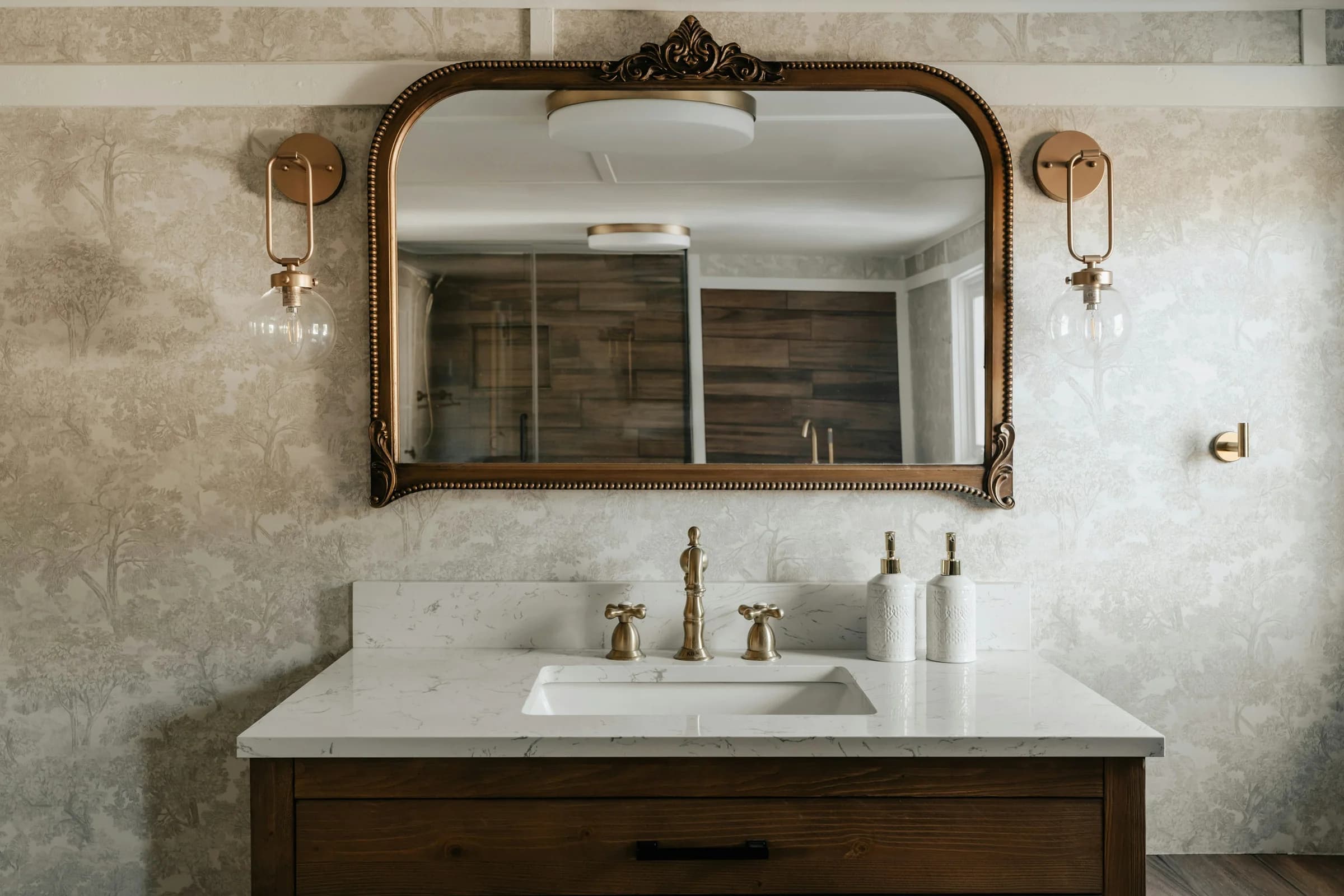
A useful brand guide connects your fonts, colors, photography, and writing. This bathroom-remodeling example shows how those choices work together on a page.
Bathroom remodeling
Planning a
bathroom remodel?
Start with the layout, storage, and finishes you need.
Explore the planning process ↗- Typography
- A large editorial heading introduces the idea. Smaller, restrained text explains the practical details.
- Color and contrast
- A quiet background and dark type give the message room. An action needs enough contrast to be found.
- Image direction
- Pair a whole-room photograph with a closer look at the materials and finishes. Captions can explain the decisions behind each detail.
- Voice and application
- A specific promise about planning can lead into a process page. Keep the same terminology in the website, estimate folder, and follow-up material.
Selected work
What did we change for these businesses?
See how we approached each business's website, content, and search challenges, what we changed, and what happened next.

How did we connect the brand, services, and booking?
Appointment-based service business
Connecting a specialist website to booking
A coordinated identity and service explanations led into working intake and booking forms on the owner's existing platform. Appointment growth wasn't measured.
Read the project
What did we connect to the booking forms?
Residential and commercial service business
Branding, service pages, and booking forms
Brand direction, service copy, booking embeds, and a hosting transition brought a service business's public presentation together. Advertising setup remained separate from a launched campaign.
Read the projectIn their words
Read the feedback collectionThe process was thorough, fast, and the results are astounding!!! Had I known this is how it would turn out I would pay 10x her prices. She's very easy to work with. No ego. Just pure brilliance!!
Questions about working with us
Frequently asked questions
Do I need to replace my logo?
Not necessarily. We review what already works and where the real confusion lies. A clearer message and consistent application may be enough.
Is branding included in a website?
Positioning and website copy are included in the website process. Additional identity work and standalone brand deliverables need their own agreed scope.
What does branding cost?
Branding is quoted around the agreed deliverables. We’ll clarify the message, visual work, and files you need before setting a price.
When should a small business rebrand?
Consider a rebrand when your services, ideal customers, or positioning have changed and your current identity tells the wrong story. Inconsistent materials may only need a refresh, not a new logo or name. We’ll review what customers recognize, what still works, and what needs to change before recommending the scope.
What is branding, and is it more than a logo?
Branding is how you define and consistently present your business: who you serve, what makes your work different, how you sound, and how you look. A logo is one visual element. Your message, colors, typography, imagery, and customer experience all help people recognize and understand the business. We’ll focus on the parts that need attention.
What’s included in a brand kit?
A brand kit brings your identity assets and usage guidance together so your website and other materials stay consistent. It can include logo variations, color values, typography, imagery direction, messaging, and examples. Our earlier downloadable sample shows a handoff format. Your proposal will specify the exact files, guidance, and deliverables we’ll create for your business.
Website design & SEO
Need help with
your website?
Tell us what you need to fix, build, or understand. We'll discuss it on a free 30-minute call.