
Local Maps Visibility
How to Get Your Business on Google Maps and Apple Maps
A complete DIY guide for getting your business listed, verified, and cleaned up on Google Maps and Apple Maps without falling into support-loop purgatory.
By Shelby DuBois · Updated
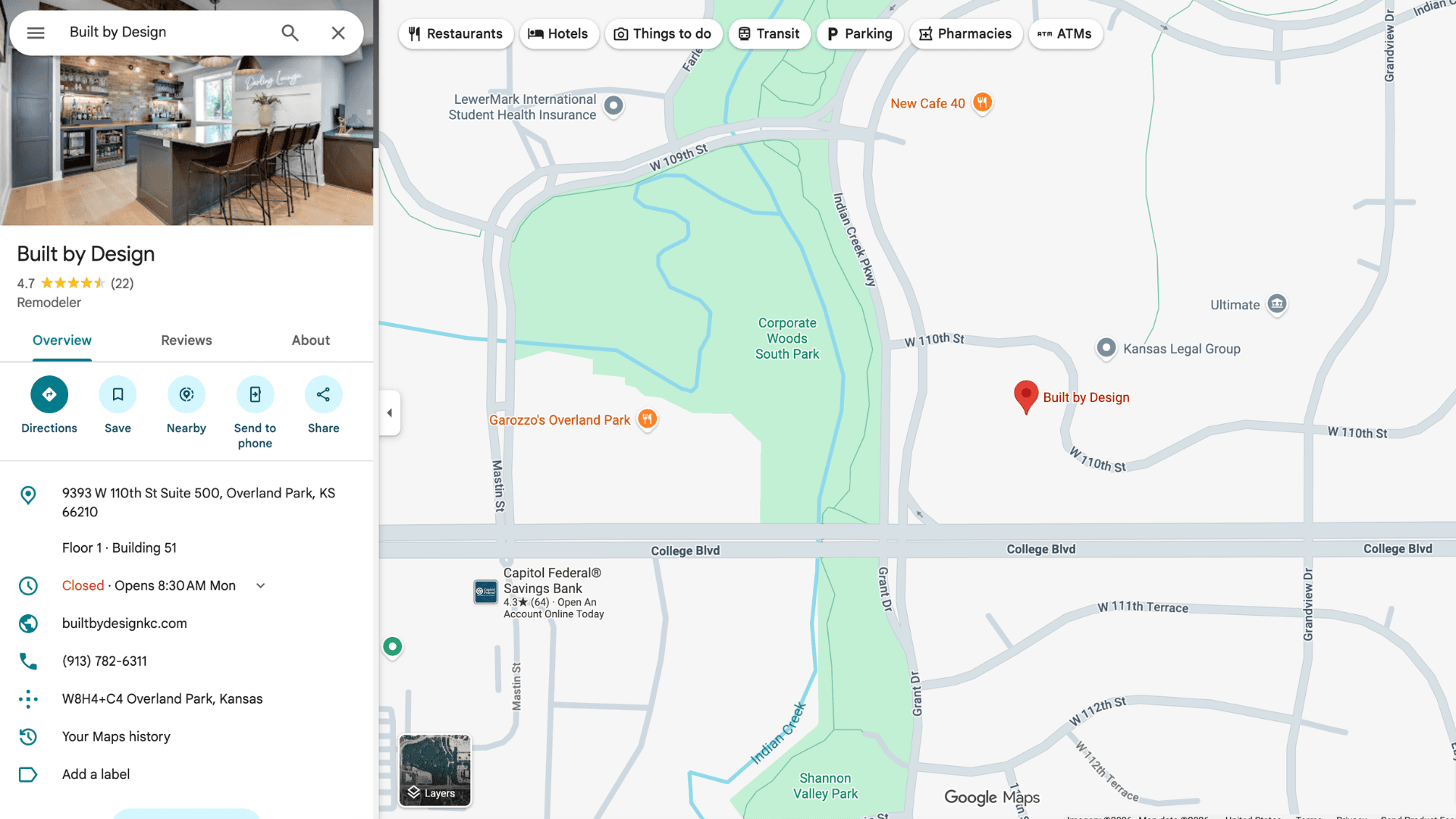
If you've ever tried to get your business listed on Google Maps or Apple Maps and given up halfway through, you're not alone. Both platforms bury the instructions, change the rules without telling anyone, and leave you staring at a "verification pending" screen with no idea what happens next.
This guide fixes that. We're going to walk through exactly why these listings matter, exactly what information and documents you need before you start, and exactly what to do step by step on both platforms. No jargon, no filler, and no "just contact support" dead ends. This is written for contractors and home service businesses, but the process works the same for almost any local business.
Grab a coffee. By the end of this, you'll know more about map listings than most marketing agencies charging $300 a month for them.
Why being on the maps actually matters
Let's start with the part nobody argues about: when someone's water heater dies at 9 PM, they don't flip through a phone book. They grab their phone and search "water heater repair near me." What happens next decides who gets the job.
Google Maps matters because local searches are tied to immediate intent. Apple Maps matters because every iPhone ships with it as the default for Siri, Safari suggestions, Apple Watch, and CarPlay.
That last point matters more than most people realize. When an iPhone user asks Siri to "find a plumber near me," Siri pulls the answer from Apple Maps, not Google. When they're driving with CarPlay and search for a business, that's Apple Maps too. If you're not listed there, you simply don't exist for a huge slice of your market.
- Roughly 46% of all Google searches have local intent. People are looking for businesses near them, billions of times a day.
- About 76% of people who do a "near me" search on their phone visit a business within 24 hours, and 28% of local searches end in a purchase, according to Think with Google research.
- On the Apple side, there are around 918 million Apple Maps users worldwide, and Apple Maps powers Siri, CarPlay, Apple Watch, and other Apple search surfaces.
- Rio SEO found that 58% of businesses haven't claimed their Apple Maps listing, and only about 16% are using Apple's free management tool. Your competitors are almost certainly ignoring Apple Maps. That's an open lane.
- Both listings are 100% free. Google and Apple never charge for a basic business listing. If someone calls you claiming you need to pay to "activate" or "claim" your listing, hang up. That's a scam that specifically targets small businesses.
Part 1: getting listed on Google Maps
Google Maps listings are managed through a free tool called Google Business Profile. You may remember it as Google My Business. Same thing, new name.
This one profile controls how you show up on Google Maps, in the map pack at the top of search results, and in the knowledge panel on the right side of desktop searches.
What you need before you start with Google
Google never hands you a clean prep list, so here's the one we wish existed. Gather this before you create the profile, because editing your info mid-verification can reset the whole process.
Use business-owned access wherever possible. A listing should not live inside an employee's personal account or an old agency login that disappears the second someone changes jobs.
Use this checklist
- A Google account. A free Gmail works, but use a business email you'll keep forever.
- Access to your business phone number, because Google may call or text it.
- Access to your business email.
- Your legal or real-world business name. This must match your signage and branding. No taglines, city stuffing, or keyword pileups. Google's official business name rules are here.
- Your physical address. Even if you don't serve customers there, Google needs a real address on file. PO boxes and virtual offices are banned.
- Your service area if you go to your customers: cities, counties, or ZIP codes you cover. Google caps this at 20 areas and recommends staying within about a two-hour drive of your base.
- A real business phone number someone answers. Automated phone menus can block phone verification.
- Your website URL, if you have one.
- Your business category. Pick the most specific category that fits: "Roofing contractor," not "Contractor."
- Business hours and approximate opening date.
- Verification proof: exterior signage, a lettered work vehicle, license, insurance certificate, utility bill, registration paperwork, uniforms, invoices, business cards, equipment, and a smartphone with a working camera.
Are you eligible if you work from home?
Google's eligibility guidelines boil down to one rule: you qualify if customers can visit you at a physical location, or if you travel to customers where they are. Most contractors are the second type, which Google calls a service-area business.
You can run your profile from a home address. Thousands of legitimate contractors do. The important part is how you display it.
- You must hide the address if customers don't visit you there. Google keeps the address on file for verification, but the public never sees it.
- You can't use a PO box, UPS Store box, or virtual office. Google checks, and profiles built on them get suspended.
- One business gets one profile. Running multiple profiles from the same location to blanket more cities is the kind of thing that gets every profile removed.
Step-by-step: create your Google Business Profile
Do this carefully the first time. The less you edit during verification, the smoother this usually goes.
- 01
Go to Google Business Profile
Go to google.com/business and sign in with your business Google account.
- 02
Search for your business first
Google often already has an unclaimed listing built from public data. If it exists, claim it instead of creating a duplicate. Duplicates cause verification chaos later.
- 03
Enter your real business name
Use the name exactly as it appears on your signage and branding. "Smith Plumbing" is fine. "Smith Plumbing | #1 Best Plumber Dallas 24/7" is asking for trouble.
- 04
Choose the right business type
Google now asks whether you're an online retailer, a local store, or a service business. Contractors should choose service business. Don't pick online-only just because you don't have a storefront. That can create compliance problems, as noted in JXT Group's 2026 verification breakdown.
- 05
Pick your primary category
Be specific. Your primary category is one of the strongest local ranking factors, and you can add secondary categories later.
- 06
Enter your address and service area
Tell Google you deliver services to customers at their locations and hide your address if customers don't visit you there. Then list the cities or ZIP codes you actually serve.
- 07
Add phone, website, and hours
Use a number a person can answer, your real website, and accurate hours. Then start verification.
Google verification: what actually happens
Google decides which verification methods you're offered based on your category, location, and how much it trusts your information. You don't get to pick from a full menu.
The methods below come from Google's verification documentation, but here's what they mean in normal language.
- 01
Video recording
This is the default for most contractors now. You record one continuous video showing proof of location, proof of business, and proof of authority. For a home-based contractor, a strong video might show the street sign, your lettered truck in the driveway, you unlocking it, your tools, and a business license.
- 02
Live video call
A real Google support person watches you show the same things over a live call during business hours. If this is offered, take it. It's often faster and gives you a chance to clarify issues in the moment.
- 03
Phone or text
Google calls or texts a code to your business number. This sounds easy, but automated answering menus can block the code. Use a direct line.
- 04
Email
A code goes to your business email. This is rarely offered, but simple when it appears.
- 05
Postcard
Google mails a physical postcard with a code to your address. It usually arrives within about 14 days, and codes expire after 30 days. This is mostly reserved for storefronts now.
After you're verified on Google
Verification gets you on the map. These are the moves that help you get chosen.
Think of the listing as a living profile, not a one-time setup task. Local buyers compare photos, reviews, services, response signals, and the website before they decide who feels credible.
If you want someone to keep the profile accurate after launch, Google Business Profile management is the service built for that work.
Use this checklist
- Add photos of your team, trucks, completed jobs, and before-and-afters. Profiles with photos tend to earn more calls and direction requests.
- Write your business description in plain language about what you do and where.
- List your services with descriptions and price ranges where possible.
- Ask every happy customer for a review, and respond to all of them, good and bad.
- Post occasional updates: recent jobs, seasonal reminders, offers, and useful local notes.
- If that upkeep sounds like a part-time job, that's because it kind of is. It's exactly what our Google Business Profile management service handles for contractors who'd rather be on the job site.
Common Google problems
Most Google Business Profile problems are boring, specific, and fixable. The trick is fixing the actual cause before you ask Google to review it again.
My verification failed
Usually the video didn't clearly prove location, business, or authority. Wait for the option to retry, prepare stronger evidence, and consider requesting a live call instead.
Someone else already claimed my business
Request ownership through the profile itself. Google notifies the current owner, who has a few days to respond. If they don't, you can usually claim it. This happens a lot when an old marketing company set up the profile and vanished.
My profile got suspended
Almost always a guidelines issue: keyword-stuffed name, visible home address, PO box, or duplicate profiles. Fix the violation first, then file a reinstatement request. Appealing without fixing the problem burns your appeal.
I don't show up even though I'm verified
New profiles take time to rank, and you'll mostly show up near your base of operations, not across your whole service area. Ranking farther out is a longer game involving reviews, citations, and your website's own SEO foundation.
Part 2: getting listed on Apple Maps
Apple's version of Google Business Profile is called Apple Business Connect, and it's the official way to control your listing on Apple Maps, Siri, and CarPlay.
It launched in 2023, most business owners still haven't heard of it, and that's exactly why it's worth your hour.
What you need before you start with Apple
Apple's checklist is shorter than Google's, but a couple requirements are stricter. The big silent blocker is two-factor authentication.
Use this checklist
- An Apple Account, formerly Apple ID. It's free to create at account.apple.com, and you don't need an iPhone or Apple device.
- A mobile phone number linked to that Apple Account, because Apple requires two-factor authentication before Business Connect will let you in.
- A business-owned Apple Account if possible, not a personal account.
- Business name, full business address, business phone number, website URL, category, hours, and legal company details.
- One verification document with your business name and address on it, such as a business license, registration document, utility bill, lease agreement, or other official document tying the business to the address.
Step-by-step: add your business to Apple Maps
Apple's process is cleaner than Google's in some ways, but it's more address-centric. Contractors should think carefully about which business address they want connected to the listing.
- 01
Go to Apple Business Connect
Go to businessconnect.apple.com, sign in with your Apple Account, and complete the two-factor authentication prompt.
- 02
Search for your business
Search by name, city, or phone number. Apple often already has a listing generated from data providers like Yelp. If your business appears, claim it. If not, choose to add a new location.
- 03
Confirm the address and map pin
Check the map pin carefully. Apple lets you fine-tune the exact placement, and for contractors this is your chance to make sure the pin isn't sitting on your neighbor's roof.
- 04
Add category, website, and hours
Apple's category list differs from Google's, so choose the closest accurate match.
- 05
Enter company details
Apple requires legal entity information even for single-location businesses. It feels redundant. Do it anyway.
- 06
Verify ownership
Claiming an existing listing usually offers phone verification, as described in Birdeye's Apple Maps guide. Adding a brand-new listing usually requires document upload, per BrightLocal's walkthrough.
- 07
Wait for review
Verification and review typically take a few days, though document review can stretch longer. You can skip verification and come back later, but your listing stays limited until it's done.
After you're verified on Apple
Once verified, Apple gives you more control over how the business appears across Maps, Siri, and CarPlay.
One important difference from Google: Apple does not host its own reviews. Apple Maps pulls ratings and reviews from third parties, primarily Yelp. So your Yelp presence quietly powers part of your Apple Maps listing whether you like Yelp or not.
Use this checklist
- Add photos of your work, team, trucks, shop, or service environment.
- Write your business description with the services and areas you cover.
- Add a Showcase, Apple's version of a promo banner, for seasonal offers.
- Set your action links, like tap-to-call and directions.
- Make sure your website link works on mobile. If your site is the weak link, run it through our free website check and see whether a homeowner would actually call you.
Common Apple problems
Apple is stricter than many business owners expect, but most issues come down to account access, document matching, or waiting for review.
I can't get into Business Connect
It's almost always the Apple Account two-factor authentication requirement. Add a mobile number to your Apple Account, enable two-factor authentication, then try again.
My documents were rejected
The name and address on the document must match the listing exactly. "Smith Plumbing LLC" on the license but "Smith Plumbing" on the listing can bounce. Match them, or upload a document showing both.
My listing exists but shows wrong info
Claim it first, then edit. Unclaimed listings are built from third-party data, and Apple will not take corrections seriously until you've proven ownership.
I verified but nothing shows in Apple Maps yet
Give it a few days. Apple reviews changes before pushing them live. If it has been more than a couple of weeks, use the support option inside Business Connect.
Google vs. Apple: quick reference
The two platforms solve the same visibility problem, but their account requirements, verification paths, review systems, and address rules are different.
| Google Maps | Apple Maps | |
|---|---|---|
| Tool | Google Business Profile | Apple Business Connect |
| Cost | Free | Free |
| Account needed | Google account | Apple Account with 2FA phone number |
| Verification | Video recording, live call, phone, email, or postcard | Phone call for existing listings or document upload for new listings |
| Documents to prep | License, utility bill, signage, vehicle branding for the video | License, utility bill, or lease matching your name and address |
| Hide your home address? | Yes, required for service-area businesses | Address is part of the listing; contractors should use a real business address |
| Reviews | Native Google reviews, hugely important for ranking | Pulled from third parties, mainly Yelp |
| Typical timeline | Minutes to 5 business days after verification | A few days to a couple of weeks |
| Voice assistant | Google Assistant | Siri, plus CarPlay and Apple Watch |
The part everyone skips: keep your info consistent
Both platforms cross-check your business info against the rest of the internet. Your name, address, and phone number, often called NAP in marketing speak, should be identical everywhere: your website, both map listings, Yelp, Facebook, and any directories.
"Smith Plumbing" in one place and "Smith Plumbing & Drain LLC" in another reads as two different businesses to an algorithm, and inconsistency is one of the quiet killers of local rankings.
If you've rebranded, moved, or changed numbers over the years, cleaning up old listings is boring but high-value work. It's part of what we untangle in our SEO service, and it starts with exactly the two listings you just built.
The bottom line
Google Maps and Apple Maps are the two front doors to your business, and both listings are free. The platforms make the process feel harder than it's mostly because they assume you already speak their language. You don't have to.
Gather your info, prep your documents, follow the steps above, and don't edit anything mid-verification.
An afternoon of work gets you in front of every homeowner in your service area who picks up their phone and searches. That's the cheapest marketing you'll ever do.
And if you'd rather hand the whole thing off, that's literally what we do. Either way, get listed. Your next customer is already searching.
Want this done for you? See how we build contractor websites that get found.
The answer desk
Maps Listing FAQs
Straight answers for getting a local business listed and verified.
How much does it cost to get on Google Maps or Apple Maps?
Nothing. Both are free. Anyone charging you to claim or activate a listing is either reselling a small setup task or running a scam.
How long does the whole process take?
Budget about an hour of active work per platform if your documents are ready. Then plan for verification review: up to 5 business days for Google video verification and a few days to a couple of weeks for Apple document review.
I work from my house and don't want my address public. Can I still do this?
Yes on Google. Set up as a service-area business and hide your address. Google's system keeps the address on file but does not show it publicly. Apple's system is more address-centric, so home-based contractors should think carefully about which address they list there.
Do I need an iPhone for Apple Business Connect?
No. It all happens in a web browser. You just need an Apple Account with two-factor authentication.
Someone else controls my listing. Am I stuck?
No. Google has an ownership-request process that gives the current owner a few days to respond. Apple lets you dispute a claim through Business Connect support. This is common when a former marketing company set things up under their own account.
Will this get me to the top of the map results?
Getting listed is the entry fee, not the win. Ranking depends on reviews, proximity, category choices, website strength, local consistency, and proof across the web. But you can't rank anywhere on a map you are not on.
Google keeps rejecting my video. What now?
Stack your evidence: signage, lettered vehicle, license, insurance certificate, and tools, all in one continuous shot with narration. If you are offered the live video call option, take it.
Ready to Stop Chasing Leads?
Let's build a system that brings qualified jobs to you. No nonsense, no inflated promises, just strategic execution.
Like what you're reading? Add us as a preferred source on Google.