
AI Website Reality Check
Vibe Coding Your Own Website Sounds Smart. For a Real Business, It's Usually a Waste of Time.
AI can put a homepage on your screen in minutes. That's not the same as building a website that gets found, earns trust, and makes the phone ring.
By Shelby DuBois · Updated
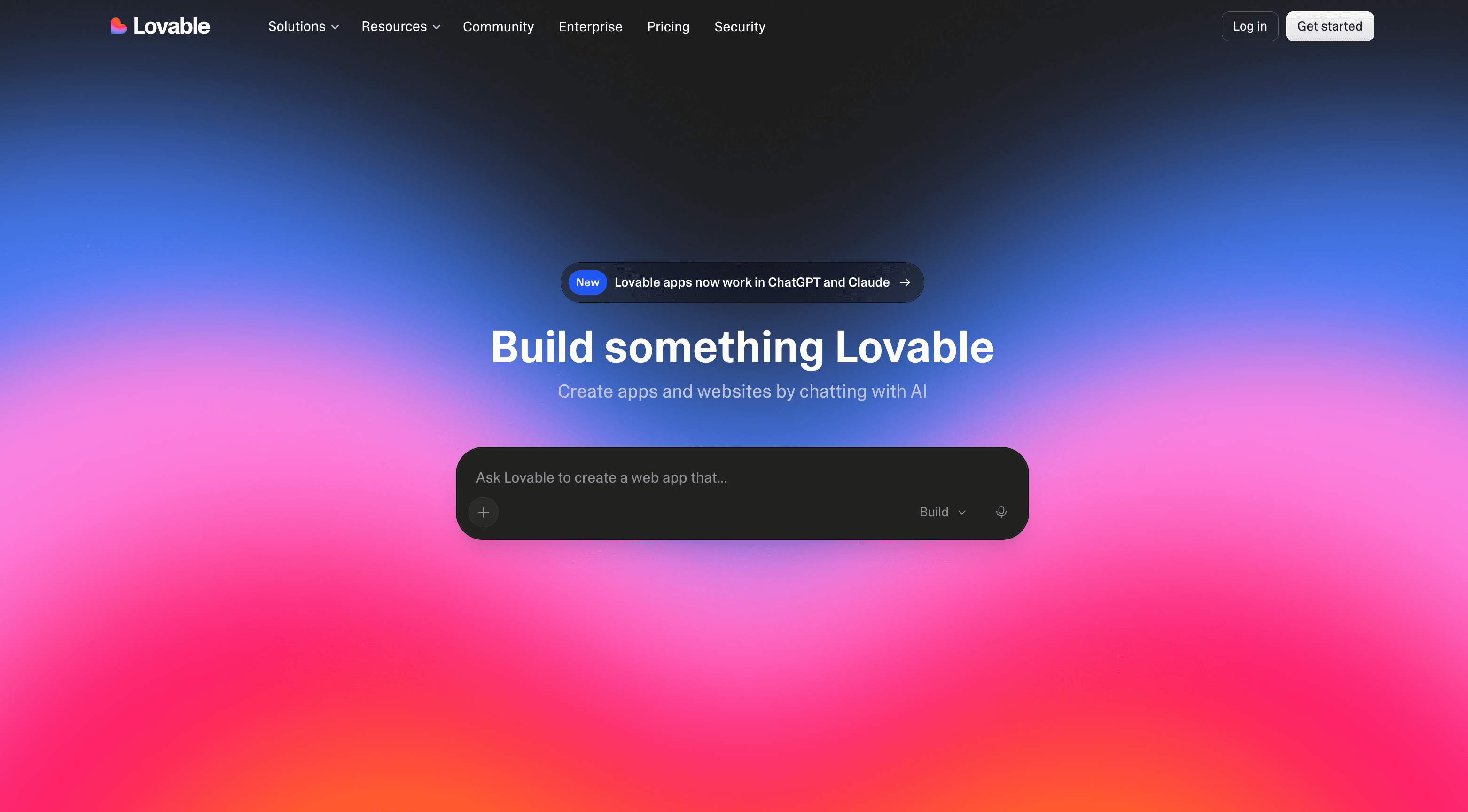
You've seen the demos. Somebody types "build me a clean website for my plumbing company" into an AI tool, and ninety seconds later there's a homepage on the screen. No developer. No invoice. No waiting. It feels like you just outsmarted every agency in town.
We get why it's tempting. And to be fair, the tools aren't junk. But there's a big gap between "a website appeared on my screen" and "a website that makes the phone ring." If you run a contracting, remodeling, or home service business, that gap is where most vibe-coded sites quietly go to die.
Here's the honest version of what's actually going on.
First, the fair part: vibe coding is genuinely good at some things
AI website tools have lowered the bar for getting something online, and that's real. If you need a quick landing page to test an idea, a personal portfolio, a one-off event page, or a rough prototype to show a partner, vibe coding can be fantastic: fast, inexpensive, and good enough for a low-stakes job.
The problem starts the moment the website has an actual business job to do: get found by strangers, earn their trust, and turn them into booked work. That's not just a design task. It's a sales, search, and trust system.
It's still an early strategy for small businesses. A 2026 Tech.co survey reported that 72% of small and midsize businesses had a website, but only 3% said they built theirs with vibe coding. That doesn't prove the approach can't work. It does show that a flashy demo isn't the same thing as a mature business playbook.
The invisibility problem nobody warns you about
A lot of AI website tools can produce client-rendered single-page applications. In plain English, the server may send a thin HTML shell and a pile of JavaScript, then rely on the visitor's browser to assemble the useful content.
Real people with modern browsers may see the page just fine. Crawlers can have a different experience. Google's JavaScript SEO documentation explains that Googlebot first crawls a page, then queues it for rendering, and uses the rendered HTML for indexing. Google also warns that JavaScript has limitations and that some content may not appear in the rendered HTML. Other search engines may choose not to process JavaScript-generated content at all.
AI visibility adds another wrinkle. OpenAI and Anthropic document separate web crawlers with their own access rules. Those systems aren't guaranteed to behave like a full browser session. If the important copy, links, or proof are difficult to retrieve without client-side execution, you've created an avoidable obstacle for search and answer engines.
That's why our SEO, GEO, and AEO work starts with crawlable content and a sound website structure.
If you want the deeper version of how Google pulls a business into results, our Google Search guide explains it in plain English.
Use this checklist
- Important page copy is present in the initial rendered HTML.
- Every useful page has a crawlable URL and returns the right status code.
- Navigation uses real links crawlers can follow.
- Metadata and canonical URLs are correct without depending on a browser fix.
- Sitemaps, robots rules, and redirects are intentional.
- The finished page is tested as a crawler sees it, not only as it looks on your laptop.
SEO, AEO, and GEO aren't settings you toggle on
Search visibility isn't a checkbox buried in the builder. It comes from hundreds of connected decisions: what pages exist, how they're organized, what each page answers, whether machines can retrieve the information, and whether the claims are supported by real evidence.
These details tend to get skipped when the entire brief is "make me a clean website." Fixing them later, after the domain points at a weak foundation, is the technical debt people complain about. You pay interest on shortcuts you didn't know you took.
- Header tags used for visual size instead of a meaningful content hierarchy.
- Page titles and descriptions that are missing, duplicated, or disconnected from search intent.
- No structured data to help search systems identify the organization, services, articles, breadcrumbs, and relevant FAQs.
- Broken or missing internal links that leave important pages isolated.
- Generic copy written for a quick skim but too vague for an answer engine to extract and reuse.
- No plan for local service pages, case studies, project content, or future topical authority.
A homepage isn't a website
For a contractor, the pages that win work are often the service pages: the ones that explain exactly what you do, where you work, what a project looks like, who's a good fit, and what happens next.
An AI tool will happily generate a gorgeous homepage and a Services section that says, "We offer quality service with a commitment to excellence." That sentence doesn't answer a single question a nervous homeowner is asking before handing you forty thousand dollars and a key to the house.
Real structure comes from knowing your market, your margins, your best projects, your service area, and your sales process. That's strategy, not a prompt. It's why our website work starts with positioning before a single pixel gets pushed.
Generic AI copy
We deliver high-quality craftsmanship and exceptional customer service for every project.
Useful service-page copy
We plan and build finished basements for Johnson County homeowners who want design, construction, and communication handled by one accountable team.
Pretty doesn't automatically convert
Say the AI nails the look. Traffic still has to turn into leads, and conversion is a separate discipline. Clear messaging, obvious next steps, believable proof, useful page order, and forms people will actually finish all matter.
A builder doesn't know that your form asks one question too many, that the call to action disappears on a phone, or that the headline talks about your company instead of the customer's problem. Those judgments come from understanding buyer behavior and then testing the finished experience.
A beautiful site that doesn't convert is still an expensive brochure. For a blunt gut check on whether your current site earns trust, run our free Would I Call You? check. It surfaces the leaks a template or an AI build tends to miss.
Use this checklist
- The first screen says what you do, where you do it, and who it's for.
- The primary call to action is obvious on desktop and mobile.
- Forms ask only for information the sales process truly needs.
- Reviews, project photos, and other proof appear near the claims they support.
- The page answers price, process, fit, and timing questions before the visitor has to ask.
- Analytics and conversion events are set up so decisions are based on behavior, not guesses.
Copy, photos, and proof are the trust layer AI can't fake
Homeowners don't hire the prettiest website. They hire the business they believe can do the work without wrecking their house, schedule, or budget.
That belief comes from real copy that sounds like a person, real photos of real projects, and real proof: reviews, case studies, before-and-afters, process details, and specific answers. AI can generate placeholder text and polished layouts, but it can't shoot your job sites, interview your customers, or understand what makes your company safer to hire than the business across town.
Our case studies and messaging and positioning work exist because trust is built, not prompted. Local trust has another layer too: your Google Business Profile, reviews, service areas, and map presence. None of that lives inside a generated homepage, and all of it shapes whether a nearby homeowner ever reaches the site.
The security and maintenance bill comes later
Generated code is still code. It can contain insecure patterns, expose form data, rely on vulnerable packages, or break when an outside service changes. A 2025 large-scale study analyzed 7,703 public files explicitly attributed to AI coding tools and identified 4,241 Common Weakness Enumeration instances across 77 vulnerability types.
That doesn't mean every AI-built website is insecure, and human developers write vulnerable code too. It means unreviewed generated code shouldn't be treated as automatically safe, especially when a site collects names, phone numbers, email addresses, and project details.
Maintenance is the second half of the problem. When something breaks six months later, somebody has to understand the architecture, dependencies, form delivery, hosting, analytics, and deployment history. A codebase prompted into existence without a plan can be harder to repair than it was to generate.
Use this checklist
- Form submissions are validated, protected from spam, and delivered securely.
- Secrets and API keys never ship to the browser or source repository.
- Dependencies are reviewed and updated on a real schedule.
- Analytics, consent, privacy language, and data retention match the site behavior.
- Someone owns backups, uptime, domain access, hosting, and future changes.
- Generated code receives human review and production testing before launch.
The real cost isn't the software. It's your time.
DIY can be cheap in dollars and brutally expensive in hours. Evenings disappear into re-prompting layouts, debugging a form that won't send, wondering why Google hasn't indexed a page, and trying to decide whether the site looks fine or actually works.
Meanwhile, the jobs you wanted are going to a competitor whose site answers the buyer's questions, proves the work, and shows up when people search. For an owner, months spent on a website that was never built to be found are time you don't get back. That's the opportunity cost.
What to do instead
You don't have to hate AI or spend a fortune. Use the technology where it helps. Prototype ideas. Organize notes. Explore layouts. Speed up repetitive production work. Then put real strategy, review, and accountability around the public website your business depends on.
A serious business site should put useful content in the HTML, give every core service a clear home, explain the market and process, make forms easy to complete, use real proof, and handle SEO, AEO, GEO, security, analytics, and maintenance on purpose.
If you want that without handing the business to an overseas mystery box, that's exactly what we do here in Kansas City. Build the website once, build it right, and let it pull its weight.
- 01
Start with the business strategy
Define the buyers, services, locations, proof, project fit, objections, and calls to action before choosing a layout.
- 02
Build a crawlable content system
Plan the homepage, service pages, location pages, case studies, FAQs, and internal links as one connected system.
- 03
Use AI with qualified oversight
Let AI accelerate drafts and production, but keep a human accountable for accuracy, positioning, code review, accessibility, security, and testing.
- 04
Measure what happens after launch
Track indexing, search visibility, form completion, phone calls, page behavior, and lead quality so the website keeps improving.
The answer desk
AI Website FAQs
Plain answers for business owners deciding whether to build their own site with AI.
Is vibe coding good for building a website?
It can be very good for prototypes, experiments, personal sites, temporary landing pages, and other low-stakes projects. A business-critical site needs additional work around strategy, search visibility, content, accessibility, conversion, security, analytics, and maintenance.
Can an AI-built website rank on Google?
Yes. AI-generated code doesn't automatically prevent a site from ranking. The finished website still has to be crawlable, useful, technically sound, well structured, fast, trustworthy, and supported by content and proof that match what buyers search for.
Should I build my own business website with AI?
Only if the stakes are low or you've got the expertise and time to review the strategy, code, search setup, forms, security, analytics, and maintenance. If you expect the website to generate serious leads, the cost of getting those pieces wrong can outweigh the money saved.
What's missing from most vibe-coded business websites?
The common gaps are specific positioning, complete service pages, local content, real proof, deliberate internal links, structured data, conversion-focused forms, analytics, accessibility, security review, and a plan for maintenance after launch.
Can AI still be part of a professionally built website?
Absolutely. AI can speed up research, drafting, coding, quality checks, and production. The difference is that a qualified person remains accountable for the strategy, accuracy, technical decisions, testing, and business result.
Ready to Stop Chasing Leads?
Let's build a system that brings qualified jobs to you. No nonsense, no inflated promises, just strategic execution.
Like what you're reading? Add us as a preferred source on Google.