
AI Citation Strategy
How to Get Your Website Cited by AI Search
Being number one on Google Maps still matters. But if ChatGPT, Google AI Mode, Claude, and Perplexity are helping people shortlist companies, your website needs to become the source they can confidently mention.
By Shelby DuBois · Updated
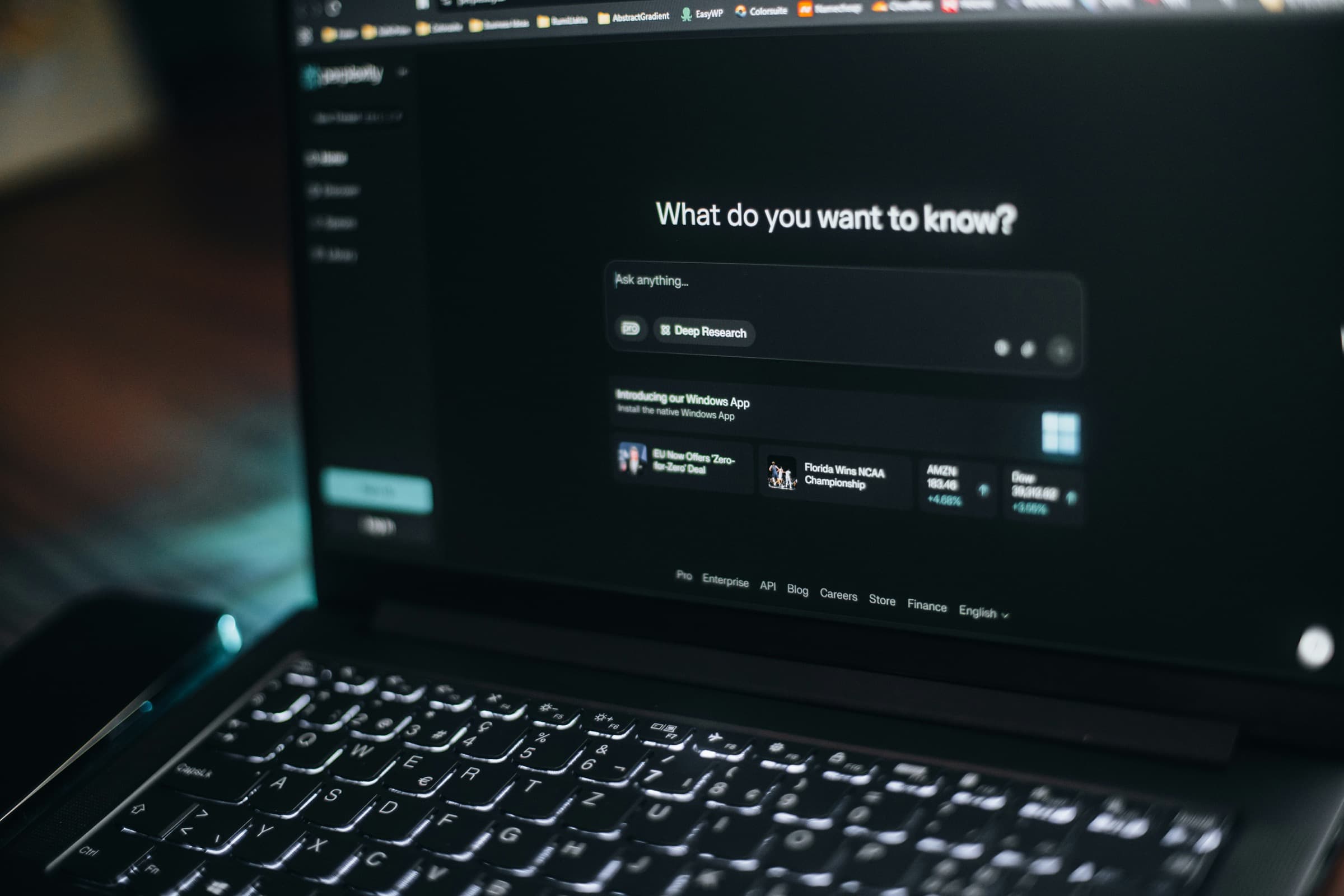
For years, the local marketing scoreboard was pretty simple: show up in the Google Map Pack, get reviews, keep the phone ringing. That still matters. A lot.
But buyers aren't just typing two-word searches and clicking the first blue link anymore. They're asking AI tools to compare companies, explain options, summarize reviews, recommend providers, and tell them who looks trustworthy.
That means the new visibility question isn't only, "Do we rank?" It's also, "When AI answers the buyer's question, are we part of the answer?"
That's where citations and mentions matter. A citation is when an AI answer links to your page as a source. A mention is when the answer names your company, even if the click never happens. Both can shape the shortlist before a person ever opens your website.
And no, this doesn't mean SEO is dead. That line needs to be retired, put in a tiny boat, and pushed into the fog. SEO still matters. But AI search changes what strong SEO has to carry.
What does it mean to be cited by AI?
A citation usually means an AI answer links to a source page that supports part of its response. ChatGPT search responses can include inline citations. Claude web search responses include citations when web information is used. Perplexity is built around source links. Google AI Overviews and AI Mode can include links that help users dig deeper.
A mention is different. The AI may name your company as a relevant option, summarize what you do, compare you against competitors, or describe your reputation without necessarily linking to you every time.
For a local business, both matter. The citation can earn the click. The mention can earn the mental shortlist.
The four big AI places to care about
The exact lineup will keep changing, but right now most local businesses should pay close attention to four answer environments: Google AI Overviews and AI Mode, ChatGPT search, Claude with web search, and Perplexity.
Google matters because it already owns the local search habit. AI Overviews and AI Mode sit close to the searches people were already making, including commercial and local research.
ChatGPT matters because people use it for longer, messier questions: comparisons, recommendations, buying criteria, and "help me decide" prompts. Claude matters for research-heavy users and business users who want sourced answers. Perplexity matters because it behaves like an answer engine with sources right on the surface.
You don't need four separate websites for four AI tools. You need one online presence that's clear enough, specific enough, and trustworthy enough for each system to understand.
- Google AI search: local relevance, crawlable content, strong SEO fundamentals, entity clarity, helpful pages, reviews, and links.
- ChatGPT search: source-worthy pages, clear explanations, current information, third-party corroboration, and pages that answer complete questions.
- Claude web search: clean pages that support factual claims, strong source context, and information that can be verified from the web.
- Perplexity: specific, well-structured pages with evidence, freshness, useful headings, and source links that help it assemble an answer.
Why being first on Google Maps isn't enough anymore
A Map Pack ranking is still valuable. For many local searches, it's still one of the fastest ways to get calls. But it isn't the whole journey.
A buyer might see you on Google Maps, then ask ChatGPT to compare you with two competitors. They might ask Perplexity what questions to ask before hiring your type of company. They might ask Google AI Mode for the best option for a specific project, neighborhood, budget, timeline, or trust concern.
If your Google Business Profile is strong but your website is thin, AI has less to work with. If your website is strong but your reviews are weak or inconsistent, AI may hesitate. If your company is invisible outside your own website, AI may find plenty of information about competitors and almost nothing about you.
The old game was ranking for the query. The new game is being understood across the whole decision.
How AI decides what to cite
No platform publishes the full source-selection recipe. Anyone promising guaranteed AI citations is selling certainty they don't have.
But the pattern is clear enough to act on. AI search systems need retrievable sources. They look for information that matches the question, supports the claim, and appears trustworthy enough to include in an answer.
That means your content has to do more than contain a keyword. It needs to make a useful claim, answer the question directly, and give the system enough context to understand who the answer applies to.
- 01
The user asks a messy question
The prompt may include service, location, budget, quality level, timeline, comparison, or trust concerns. Example: "Who should I call for a high-end basement remodel in Johnson County with good communication?"
- 02
The system expands the research task
AI search can break one question into related searches or pull from multiple sources. It may look for service pages, reviews, local profiles, articles, directories, case studies, and third-party mentions.
- 03
It selects sources that seem useful
Pages with specific, crawlable, current, clearly organized information have a better shot than vague brochure pages. Primary sources and pages with real proof tend to be easier to trust.
- 04
It writes the answer and attaches sources
The final response may cite your site, mention your company, cite a review platform, cite a third-party article, or leave you out entirely if another source answers the question better.
What your website needs before AI will trust it
Start with the boring foundation, because that's where most businesses quietly lose. Your pages need to be crawlable, indexable, fast enough, readable, internally linked, and organized around real services.
Then the content needs substance. A service page that says "we provide quality work and customer satisfaction" doesn't give AI much to cite. A page that explains who the service is for, what problems it solves, what the process looks like, what affects cost, where you work, what proof you've got, and what makes your company different gives AI actual material.
The goal isn't to write for robots. The goal is to write so clearly that both the buyer and the robot stop guessing.
Use this checklist
- One strong page for every core service you actually want to sell.
- Clear service-area information tied to real places you serve.
- FAQs that answer buyer questions directly instead of dodging them.
- Case studies, project examples, or proof pages with real detail.
- Author, company, and contact information that make the source feel accountable.
- Internal links between services, locations, blog posts, reviews, and case studies.
- Schema that matches the actual page type, such as Article, FAQPage, LocalBusiness, Service, BreadcrumbList, and Organization where appropriate.
- Updated dates on content where freshness matters.
The citation-worthy content formula
AI citations tend to favor pages that answer one clear question better than the generic internet pile. That doesn't mean every page should read like a stiff encyclopedia entry. It means every important page should have a job.
A good citation-worthy page has a direct answer, useful context, proof, structure, and a reason to trust the business behind it.
- Answer the question in the first few lines.
- Use descriptive H2s and H3s that match real buyer questions.
- Include definitions, ranges, criteria, checklists, and examples.
- Back up claims with proof from projects, reviews, photos, process details, or credible external sources.
- Make the company, service area, and ideal customer obvious.
Weak page
"We offer expert basement remodeling services in Kansas City. Contact us today for a free estimate." That's technically content, in the same way a napkin is technically office furniture.
Citeable page
"A high-end Kansas City basement remodel often involves layout planning, bathroom rough-ins, wet bar plumbing, egress requirements, custom trim, lighting design, flooring, and permit coordination. Here's how our process works and what changes the investment."
How to keep AI mentioning your company
AI mentions aren't one-and-done. A page can be strong today and stale six months from now, especially if competitors keep publishing clearer service pages, better reviews, stronger case studies, and more third-party proof.
To keep your company showing up, you need a living content system. That means your website, Google Business Profile, review strategy, case studies, social proof, and external mentions all keep reinforcing the same story.
If you want AI to remember the company correctly, repeat the important facts everywhere normal people would expect to find them. Same company name. Same service categories. Same locations. Same positioning. Same proof.
Use this checklist
- Update service pages when your offers, process, locations, or project types change.
- Publish new project pages or case studies instead of letting proof die in the camera roll.
- Ask customers for reviews that mention the project type, city, and experience in natural language.
- Keep your Google Business Profile services, photos, posts, categories, and description aligned with the website.
- Earn third-party mentions from partners, local publications, associations, directories, podcasts, sponsorships, and vendor pages.
- Monitor prompts monthly to see where you're cited, where competitors are cited, and which sources AI seems to trust.
What not to do
Don't spam fake AI pages. Don't publish 200 city pages that say the same thing with a swapped location. Don't add schema for services you don't actually offer. Don't invent awards, fake reviews, fake authors, fake case studies, or fake experience.
AI systems are imperfect, but they're very good at finding patterns. If your brand footprint is thin, inconsistent, or suspicious, the shortcut won't age well.
Also, don't obsess over llms.txt, hidden prompt bait, or weird model-whispering hacks before the actual website is useful. A tiny text file won't rescue a company page that can't explain what the company does.
- Don't keyword-stuff reviews or ask customers to write unnatural phrases.
- Don't copy competitor content and lightly reheat it.
- Don't hide pricing, process, service area, and proof behind a contact form.
- Don't rely only on your homepage to explain the whole business.
- Don't treat AI visibility as separate from SEO, reputation, PR, and content quality.
External links make your article more trustworthy
Good AI citation strategy isn't only about getting other systems to cite you. Your own pages should cite useful sources too when you're making claims about platforms, statistics, regulations, technical standards, or research.
External links help readers verify your claims. They also make the page feel less like a sales pamphlet wearing a mustache.
For this topic, that means linking to official documentation from OpenAI, Google, Anthropic, and Perplexity where possible, plus credible research when you discuss click behavior, AI Overviews, or citation accuracy.
Internal links tell AI how your site fits together
Internal links aren't just for SEO juice. They show relationships. Your AI citation guide should link to your AI search article, and your AI search article should link to SEO foundations. Your SEO page should link to website design, GBP, content production, and case studies.
For local businesses, this matters because AI is trying to understand the entity: who your business is, what you do, where you do it, and why anyone should trust you.
A disconnected website makes every page fend for itself. A connected website teaches the whole system.
- Link service pages to related blog posts and case studies.
- Link location pages to relevant services and project proof.
- Link blog posts to the service page that solves the problem.
- Link Google Business Profile content back to the most relevant page, not always the homepage.
How to measure AI citation visibility
AI visibility is messier than rank tracking. Different users, locations, accounts, models, and prompts can produce different answers. That doesn't make measurement useless, though. It just means you need a sane process.
Build a prompt set around real buyer questions. Run it monthly. Track which companies get mentioned, which sources get cited, what the answer says about you, what it gets wrong, and what content appears to influence the answer.
Then improve the source material. If AI keeps citing a competitor's cost guide, write a better cost guide. If it cites directories instead of your website, strengthen your own pages and make sure your directory profiles match. If it misunderstands your services, your entity signals are probably fuzzy.
- 01
Track buyer prompts
Use questions prospects would actually ask, like comparisons, cost, trust, service fit, location, and red-flag prompts.
- 02
Record mentions and citations
Note the companies named, the linked sources, the order of mentions, the language used, and whether the answer is accurate.
- 03
Map gaps to content
If your company is missing from a topic, ask what page, proof, review pattern, or third-party mention would make you a more obvious answer.
- 04
Repeat after updates
AI visibility changes as sources change. Recheck after publishing new pages, earning reviews, adding case studies, or fixing technical issues.
The practical playbook
If you want the short version, here's the thing: become the clearest source in your category.
For DewBwah clients, that usually means building the website like a trust engine instead of a brochure. Service pages answer the buying questions. Blog posts support research. Case studies prove the work. GBP reinforces the local entity. Reviews repeat the real-world proof. Technical SEO makes the whole thing discoverable.
That's how you earn the citation. That's how you earn the mention. And that's how you become harder for AI to ignore.
Use this checklist
- Clarify your positioning so AI can describe the company in one sentence.
- Create stronger service pages before publishing random blog posts.
- Write answer-first content around cost, process, comparison, timing, fit, and risk.
- Use real proof: photos, projects, reviews, case studies, team expertise, and local details.
- Cite credible external sources when explaining AI search, SEO, technical claims, or market shifts.
- Build internal links so every important page supports the next one.
- Keep the brand footprint consistent across the site, GBP, directories, social profiles, and third-party mentions.
Why this matters more than vanity rankings
Ranking first is useful. Being trusted is better. AI search is moving more of the research, comparison, and filtering into the answer itself.
That means the company with the clearest proof can win attention before the company with the prettiest ad budget. The company with the most helpful pages can shape the buyer's criteria. The company with consistent reviews, local signals, and useful content can become the recommendation, not just another option.
This isn't about chasing a shiny new acronym. It's about making your business easier to understand, easier to trust, and easier to recommend.
Because when AI is helping your next customer decide who to call, you don't want to be merely findable. You want to be citeable.
The answer desk
AI Citation FAQs
How ChatGPT, Google AI search, Claude, and Perplexity use websites as sources.
Can you guarantee that ChatGPT, Claude, Gemini, or Perplexity will cite my website?
No. Nobody can honestly guarantee AI citations across major platforms. You can improve the odds by publishing clearer, more useful, better-structured, more trustworthy content and by strengthening reviews, profiles, local signals, and third-party mentions.
Is getting cited by AI more important than ranking on Google Maps?
For local businesses, Google Maps still matters. AI citations and mentions matter because buyers increasingly use AI tools to compare companies, summarize options, and decide who is trustworthy before they click or call. The strongest strategy works on both.
What pages are most likely to help a business get cited by AI?
Detailed service pages, cost guides, comparison guides, FAQs, case studies, project pages, local service-area pages, and proof-heavy articles are usually more useful than thin homepage copy or generic blog posts.
Do I need special schema to show up in AI answers?
There's no magic schema that guarantees AI citations. Use structured data that accurately describes the page, such as Article, FAQPage, LocalBusiness, Organization, Service, and BreadcrumbList when appropriate. Schema supports strong content; it doesn't replace it.
How do I keep AI mentioning my company over time?
Keep your website current, publish new proof, earn specific reviews, maintain your Google Business Profile, build third-party mentions, align your business information across the web, and monitor real buyer prompts to find gaps.
Ready to Stop Chasing Leads?
Let's build a system that brings qualified jobs to you. No nonsense, no inflated promises, just strategic execution.
Like what you're reading? Add us as a preferred source on Google.